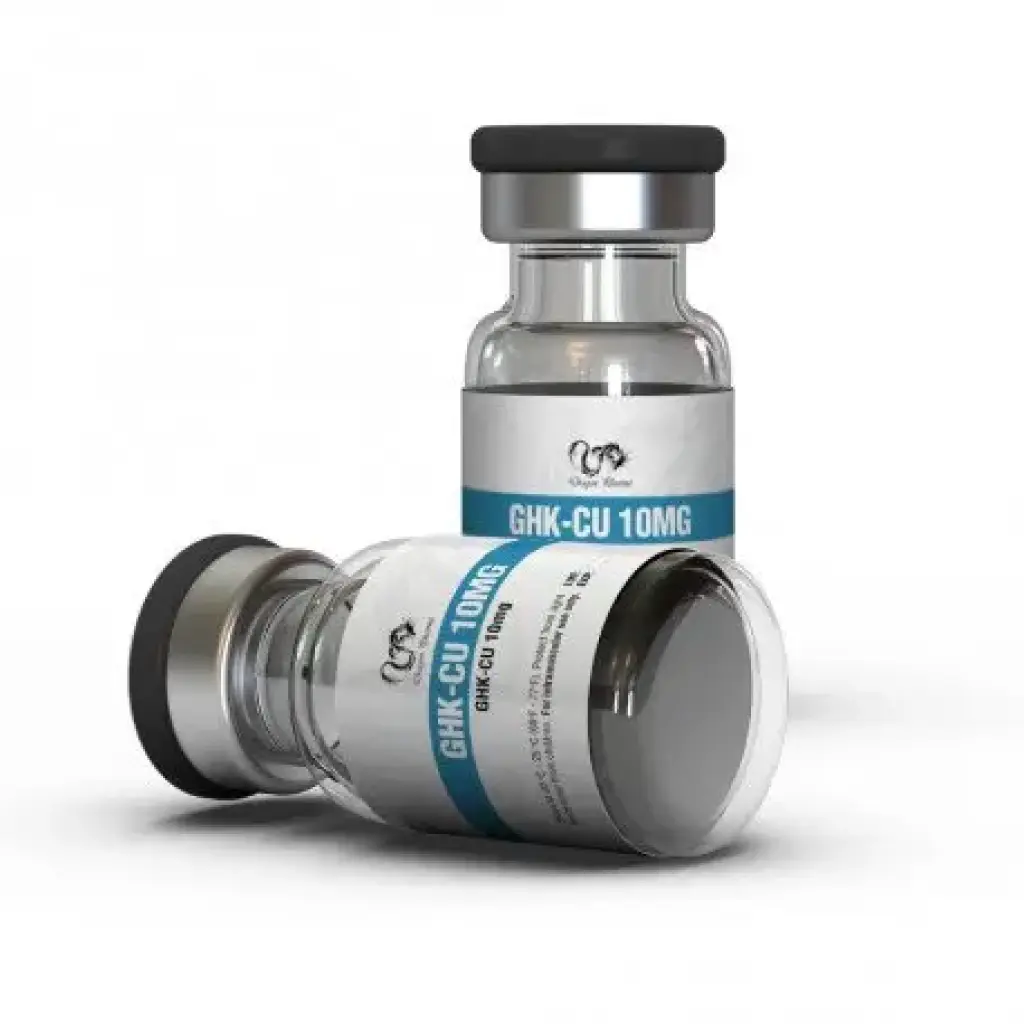
Dragon Pharma GHK-Cu 10 mg: The Ultimate Copper Peptide for Skin Rejuvenation and Tissue Repair
Dragon Pharma GHK-Cu 10 mg offers a powerful, multi-faceted approach to aesthetic enhancement and systemic repair that is unparalleled in the peptide world. This product features the renowned copper-binding tripeptide (Glycyl-L-Histidyl-L-Lysine) complexed with copper, a naturally occurring signaling molecule in human plasma that plays a critical role in tissue remodeling and repair. While its concentration decreases with age, stress, and toxin exposure, reintroducing this potent peptide through Dragon Pharma's pure, lyophilized formulation can trigger a remarkable cascade of regenerative processes. From dramatically improving skin quality and elasticity to accelerating wound healing and reducing inflammation, GHK-Cu is a versatile tool for bodybuilders seeking to repair tissue damage from intense training and for anyone pursuing tangible anti-aging benefits.
Effects and Benefits of GHK-Cu
GHK-Cu functions as a master regulator of gene expression, shifting the activity of numerous genes from a state of decay to a state of repair and rejuvenation. Its benefits are extensive and well-supported by decades of research. For skin health, it is nothing short of transformative: it increases collagen, elastin, and glycosaminoglycan production, leading to firmer, thicker, more hydrated skin with a visible reduction in fine lines, wrinkles, and hyperpigmentation. Beyond cosmetics, GHK-Cu is a powerful healer, significantly accelerating the repair of skin, muscle, bone, and liver tissue by attracting immune cells and endothelial cells to the injury site and enhancing blood vessel formation. It also exhibits strong anti-inflammatory and antioxidant properties, protecting cells from damage and reducing systemic inflammation. For bodybuilders, this translates to faster recovery from workouts and injuries. Furthermore, it promotes hair growth and thickness, improves cognitive function, and has shown potential in supporting lung tissue repair. The comprehensive review of GHK-Cu's biological activities details its ability to modulate multiple pathways involved in tissue repair and protection.
Dosage and Administration Protocol
Dragon Pharma GHK-Cu 10 mg is supplied as a lyophilized powder that requires reconstitution before use. A key advantage of GHK-Cu is its flexibility in administration routes, allowing for both systemic and localized effects.
Reconstitution: Inject 1-2 mL of Bacteriostatic Water into the vial. Gently swirl until the blue-colored powder is completely dissolved. Avoid shaking. The solution can be stored in the refrigerator after reconstitution.
Common Dosing Protocols:
- Subcutaneous Injection (Systemic Effects): For overall anti-aging, healing, and systemic benefits, a common dose is 1-2 mg per day, administered via subcutaneous injection. This equates to 0.1-0.2 mL of a solution reconstituted with 1 mL of water.
- Topical Application (Skin-Specific): For targeted skin rejuvenation, the reconstituted solution can be added to a serum or cream. A standard concentration is 1-3% GHK-Cu in the final product, applied directly to the face and neck once or twice daily.
- Microneedling / Mesotherapy: For enhanced skin penetration, the reconstituted solution is often used in conjunction with microneedling devices or injected superficially in the dermis (mesotherapy) by qualified practitioners.
Cycles typically last from 1 to 3 months, followed by a break of equal length.
Incorporating GHK-Cu into Your Health and Aesthetics Regimen
GHK-Cu is a superb foundational peptide that complements a wide range of health, performance, and aesthetic goals. Its primary role is in repair and rejuvenation, making it an excellent partner for other compounds.
- The Ultimate Healing Stack: For serious injury recovery or post-surgery healing, combine GHK-Cu with other powerful repair peptides. BPC-157 provides robust systemic healing, while TB-500 targets muscle and connective tissue repair, creating a synergistic healing environment.
- Comprehensive Anti-Aging Protocol: For a full-spectrum longevity approach, stack GHK-Cu with Epitalon 50 mg for telomere and sleep support. Adding a growth hormone secretagogue like Ipamorelin can further enhance tissue quality and fat loss.
- Hair Restoration Stack: GHK-Cu's ability to promote hair growth can be amplified by combining it with topical Minoxidil 10 and oral Finasteride (for men) for a multi-pronged attack on hair loss.
- Performance and Recovery Enhancement: Athletes can use GHK-Cu alongside their anabolic cycles to mitigate connective tissue stress. For example, while running a joint-stressing compound like Winstrol 50, GHK-Cu can provide foundational support to tendons and ligaments.
Possible Side Effects and Safety
GHK-Cu is generally very well-tolerated with a high safety profile. However, some transient side effects can occur, primarily related to its potent biological activity.
- Injection Site Reactions: The most common side effect is temporary pain, itching, or a small knot at the injection site. This is due to the peptide's local tissue remodeling action and usually subsides within a few hours.
- Detoxification Symptoms: As GHK-Cu can mobilize stem cells and initiate repair processes, some users may experience mild, flu-like symptoms or fatigue in the first week as the body adjusts. This is temporary and a sign of systemic activity.
- Skin Purging (Topical Use): When applied to the skin, some users may experience initial breakouts or redness as the peptide accelerates skin cell turnover. This typically resolves as the skin acclimates.
- No Hormonal Effects: GHK-Cu does not influence the HPTA axis, does not aromatize, and has no androgenic or estrogenic side effects like acne, hair loss, or water retention.
- Copper Overload: While a theoretical concern, the dose in GHK-Cu is minuscule compared to the body's total copper content and is considered safe. However, individuals with Wilson's disease (a copper metabolism disorder) should avoid use.
- Blood Pressure: No significant impact on blood pressure has been reported.
Starting with a lower dose to assess tolerance is always a recommended practice.