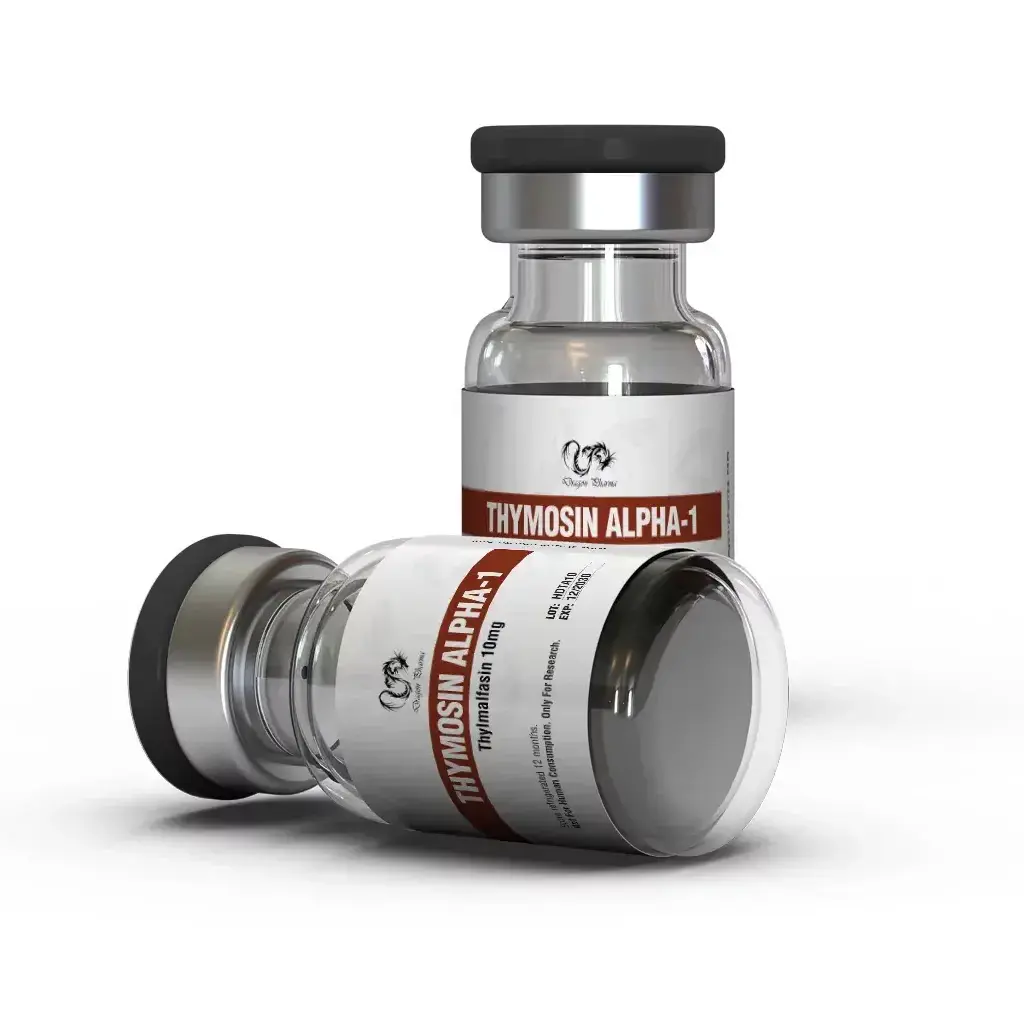
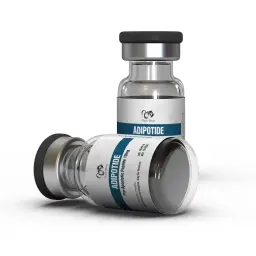
Dragon Pharma Thymosin Alpha-1 10 mg supplies a lyophilized formulation of Thymosin Alpha-1 (Tα1), a 28-amino-acid peptide originally isolated from thymus tissue that has become one of the most clinically studied immune-modulating peptides in medicine. Unlike research peptides with only preclinical data, Tα1 has been tested in numerous human trials and is approved as a prescription drug (thymalfasin/Zadaxin) in more than 35 countries for chronic hepatitis and as an immune adjuvant.
This Dragon Pharma formulation provides 10 mg of Thymosin Alpha-1 per 2 mL vial in lyophilized powder form, requiring reconstitution before laboratory use. Tα1 works by enhancing T-cell function, particularly CD8+ cytotoxic T-cell activity, while reducing markers of T-cell exhaustion. However, it is not FDA-approved in the United States, and as of September 2026 it is not eligible for 503A pharmacy compounding in the US. This research vial is not the approved pharmaceutical product.
Key Research Characteristics
Extensive Human Data: Over 50 peer-reviewed human trials, including randomized controlled studies in hepatitis B, sepsis, and COVID-19.
T-Cell Focused Mechanism: Enhances CD8+ T-cell cytotoxicity, granzyme B secretion, and reduces PD-1/TIM-3/LAG-3 exhaustion markers.
International Approval: Approved as Zadaxin/thymalfasin in 35+ countries for chronic hepatitis B/C and as an immune adjunct.
Not FDA-Approved: No US approval; not eligible for 503A compounding as of September 2026.
Rapid Clearance: Mouse data show peak serum levels at 2 minutes and significant renal excretion; human pharmacokinetics show rapid elimination.
Distinct from TB-500: Tα1 is an immune modulator; TB-500 is an actin-binding repair peptide—different molecules, different mechanisms.
How Thymosin Alpha-1 Works
Tα1 binds intracellular Toll-like receptors (TLR-9 and TLR-2) and activates MyD88-dependent signaling, upregulating interleukin-2 and interferon-γ, which in turn expand virus-fighting CD8+ cytotoxic T-cells. A 2026 study demonstrated that Tα1 significantly enhanced CD8+ T-cell-mediated apoptosis of breast cancer cells in culture, increased granzyme B secretion beyond CD3/CD28 stimulation alone, and partially restored effector function in exhausted T-cells while reducing PD-1, TIM-3, and LAG-3 expression.
In clinical contexts, Tα1 has been studied as an adjunct to standard therapy. A 2025 retrospective study in pulmonary tuberculosis found that adding Tα1 to the 2HRZE/4HR regimen improved foci resorption and cavity closure rates, improved lung function, and reduced inflammatory markers compared to standard therapy alone. However, the FDA has noted that for hepatitis C, Tα1 has not been associated with high rates of sustained virologic response, and its benefit in combination with current standard-of-care therapies is not established.
Thymosin Alpha-1 vs. TB-500
The two thymosin peptides are frequently confused, but they are unrelated in function. Tα1 (this product) is an immune modulator that targets TLR signaling and T-cell function. TB 500 5 mg (Thymosin Beta-4) is an actin-sequestering peptide studied for cell migration, angiogenesis, and tissue repair. Tα1 has over 50 human trials; TB-500 has only two small Phase 2 ophthalmology trials and no systemic-use trials. They are not interchangeable and no controlled study has evaluated them together.
Important Considerations
This product is a lyophilized research peptide supplied for laboratory investigation only. It is not intended for human or veterinary consumption. Tα1 is not FDA-approved in the US, and as of September 2026 it is not eligible for 503A compounding. The approved international product (Zadaxin) is a specific pharmaceutical formulation with established dosing for hepatitis; this research vial is not equivalent.
Formulation & Research Profile
Product Specifications
Labeled product attributes and general research reference data for Thymosin Alpha-1 10 mg.
Pharmacological values are general reference information. This product is supplied for laboratory research only. Thymosin Alpha-1 is approved as Zadaxin in 35+ countries but is not FDA-approved in the US.
Laboratory Handling Context
Research Handling Information
Thymosin Alpha-1 is supplied as lyophilized powder for laboratory research. The approved international product has specific subcutaneous dosing schedules; this research vial is a different format with no established human protocol.
Reconstitution Overview
Lyophilized Thymosin Alpha-1 requires reconstitution with a suitable solvent before laboratory use. Bacteriostatic Water is commonly used for peptide reconstitution. For a 10 mg vial, adding 2 mL of solvent yields a concentration of 5 mg/mL. Gentle swirling—not vigorous shaking—is recommended to avoid peptide aggregation.
The internationally approved Zadaxin product is supplied as a lyophilized powder for subcutaneous injection at 1.6 mg per dose, typically twice weekly. This Dragon Pharma 10 mg vial contains more than six times that dose and is a research format, not a pharmaceutical equivalent. No human pharmacokinetic data exists for this specific reconstituted product.
Practical Handling Considerations
Reconstitution volume: 2 mL solvent yields 5 mg/mL; adjust volume to achieve the desired working concentration.
Solvent selection: Bacteriostatic water is standard for most peptide research.
Handling technique: Swirl gently; avoid vortexing or vigorous shaking.
Storage after reconstitution: Refrigerate reconstituted peptide; stability data for this specific product is not available.
Approved drug context: Zadaxin uses 1.6 mg SC twice weekly for hepatitis; this is not a recommendation for research vials.
Related immune peptides:LL-37 5 mg is an antimicrobial peptide with different immune mechanisms; KPV 5 mg is an anti-inflammatory tripeptide.
Important Research Notice
Thymosin Alpha-1 has no established dosing protocol for reconstituted research vials. The approved international product (Zadaxin) is a specific pharmaceutical formulation with established dosing for hepatitis and immune adjunct use. This product is not FDA-approved and is not eligible for 503A compounding in the US as of September 2026. It is supplied strictly for laboratory research.
Delivery & Fulfillment
Shipping & Delivery Information
Shipping estimates and fulfillment options vary by warehouse and product availability. Review the information below before placing your order.
Shipping Options & Delivery Estimates
International Warehouse
International Fulfillment
13–15Business Days
Orders dispatched from our international warehouse typically arrive within 13–15 business days after dispatch. Delivery times may vary depending on destination, customs processing, and carrier conditions.
U.S. Domestic Warehouse
Domestic Fulfillment
4–5Business Days
Eligible orders dispatched from our U.S. domestic warehouse typically arrive within 4–5 business days after dispatch. This option is available only for products stocked in the domestic warehouse.
Important Shipping Information
Warehouse availability: Not all products are available from both warehouses. Available shipping options are displayed on the product page.
Order processing: Delivery estimates begin when an order is dispatched, not when payment is completed. Processing time before dispatch is additional.
Shipment tracking: Tracking information is provided when available, according to the applicable shipping policy.
Delivery delays: Customs inspections, carrier disruptions, holidays, and other circumstances may affect estimated delivery times.
Full Shipping Policy
Review the complete shipping terms, delivery conditions, and applicable order policies before placing an order.
Lyophilized peptides require specific storage conditions to maintain stability. Follow the guidance below for Dragon Pharma Thymosin Alpha-1 10 mg.
Recommended Storage Conditions
Storage Temperature
Store lyophilized powder refrigerated at 2°C to 8°C or frozen at -20°C for long-term storage. Avoid repeated temperature fluctuations.
Moisture Protection
Keep the vial sealed and protected from humidity. Lyophilized peptides are hygroscopic; moisture exposure can degrade the peptide before reconstitution.
Light Exposure
Store in the original packaging or a dark container. Protect from direct light, which can degrade peptide structure.
Original Vial
Keep the lyophilized powder in the supplied vial until reconstitution. Allow refrigerated vials to reach room temperature before opening to prevent condensation.
Handling & Stability
Expiration date: Refer to the date printed on the vial, if present. No manufacturer-verified shelf life was supplied for this batch.
Shelf life (lyophilized): Generally stable for extended periods when refrigerated or frozen and protected from moisture; follow any manufacturer-printed date.
After reconstitution: Refrigerate and use within the timeframe specified by your laboratory protocol. No stability data for this specific product was supplied.
Handling technique: Use sterile technique when reconstituting. Avoid repeated freeze-thaw cycles of reconstituted solution.
Child safety: Store in a locked refrigerator or cabinet inaccessible to children and pets.
Disposal: Dispose of unused peptide according to institutional or local laboratory waste guidelines.
Product Questions & Answers
Frequently Asked Questions
Common questions about Thymosin Alpha-1 10 mg, its research background, and laboratory handling.
01
What is the Thymosin Alpha-1 peptide used for in research?
Tα1 is studied primarily as an immune modulator. Human trials have examined its use in chronic hepatitis B/C, as an immune adjuvant in cancer therapy, in sepsis, and in tuberculosis. A 2026 study demonstrated enhanced CD8+ T-cell cytotoxicity against breast cancer cells in culture. It is approved as Zadaxin in 35+ countries but not in the US.
02
How does Thymosin Alpha-1 make you feel?
No human data describes subjective "feelings" from Tα1. In clinical trials, it is generally reported as well-tolerated with adverse effects comparable to placebo in many studies. The peptide works at the immune-cell level (enhancing T-cell function) rather than producing noticeable sensations. Any perceived effects from research-grade products are anecdotal and not from controlled settings.
03
How long does it take Thymosin Alpha-1 to work?
Immune modulation is not immediate. In clinical trials, treatment courses typically run 6–12 weeks or longer, with immune parameters and clinical outcomes assessed at completion. The approved Zadaxin product is dosed twice weekly for hepatitis, with effects accumulating over the treatment period. No onset timeline exists for research vials or non-medical use.
04
Is Thymosin Alpha-1 the same as TB-500?
No. They are unrelated molecules despite both being called "thymosin." Tα1 is an immune modulator that targets TLR-9 and enhances T-cell function. TB 500 5 mg (Thymosin Beta-4) is an actin-binding peptide studied for cell migration and tissue repair. Tα1 has over 50 human trials; TB-500 has no systemic-use human trials. They are not interchangeable.
05
Is Thymosin Alpha-1 FDA-approved?
No. Tα1 is approved as thymalfasin (Zadaxin) in more than 35 countries for chronic hepatitis B/C and as an immune adjuvant. In the US, it is not FDA-approved for any indication. As of September 2026, it is also not eligible for 503A pharmacy compounding. This Dragon Pharma product is a research peptide, not the approved drug.
06
What did the tuberculosis trial show?
A 2025 retrospective study of 106 patients found that adding Tα1 to standard tuberculosis therapy improved total effective rate, foci resorption, and cavity closure rates compared to standard therapy alone. The Tα1 group also showed better lung function and reduced inflammatory markers. This is promising but retrospective data, not a randomized controlled trial.
07
How should I store lyophilized Thymosin Alpha-1?
Store the lyophilized powder refrigerated (2–8°C) or frozen (-20°C), protected from light and moisture. Allow vials to reach room temperature before opening to prevent condensation. After reconstitution, refrigerate and use according to your laboratory protocol. Avoid repeated freeze-thaw cycles. No manufacturer-verified stability data was supplied for this specific batch.
08
What is the half-life of Thymosin Alpha-1?
In mice, Tα1 peaks in serum within 2 minutes of intraperitoneal injection and is rapidly excreted, with significant renal clearance. Human pharmacokinetic data show similarly rapid elimination, though specific half-life values are not widely published in accessible sources. This rapid clearance is why approved protocols use frequent dosing (twice weekly) rather than single administration.
No reviews yet.
Have you tried this product? Share your experience to help other customers. Log in to write a review.