
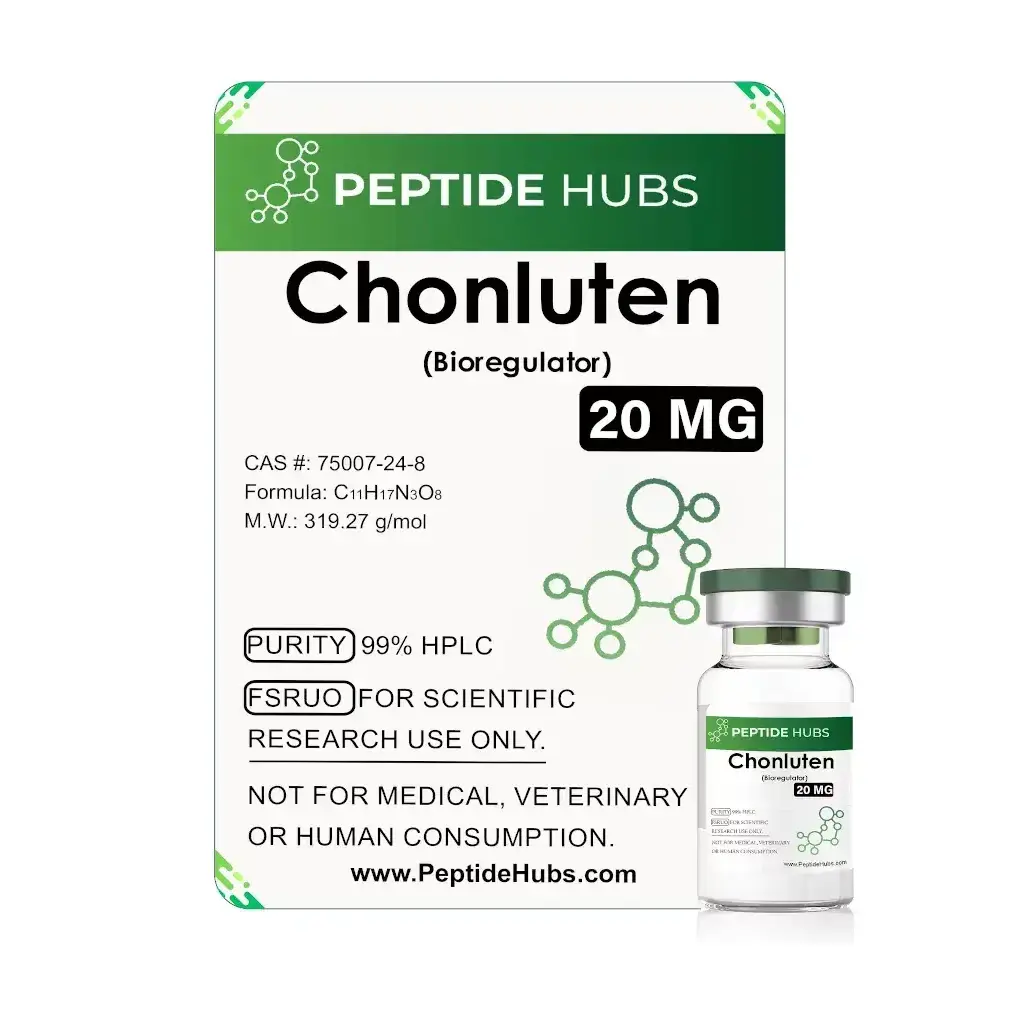
Drug Class: Synthetic Lung Tissue Bioregulator Peptide
Composition: Chonluten (Lung-derived peptide complex)
Dosage: 20 mg/vial
Form: Lyophilized (Freeze-Dried) Powder
Unit: 2 mL Sterile Vial
Brand: Peptide Hubs
For Research Use in Laboratory Settings Only.
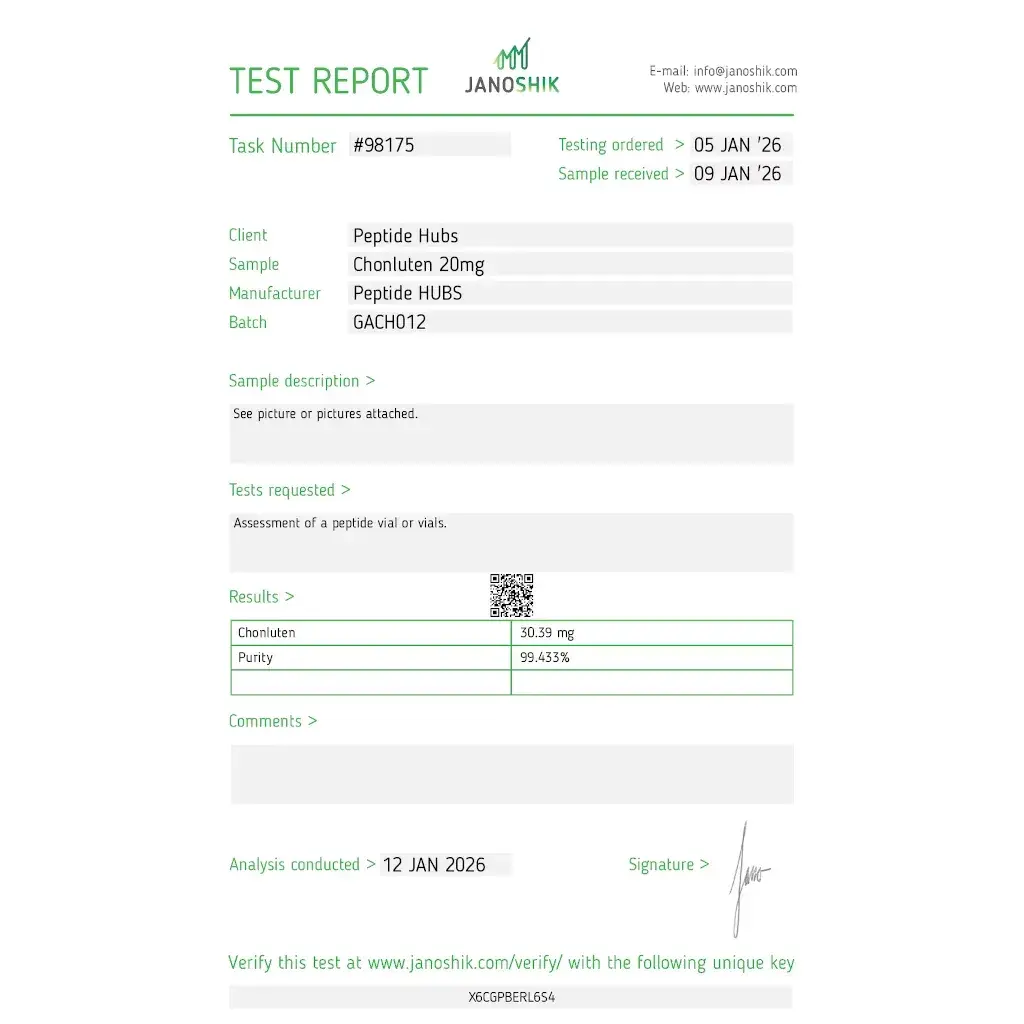
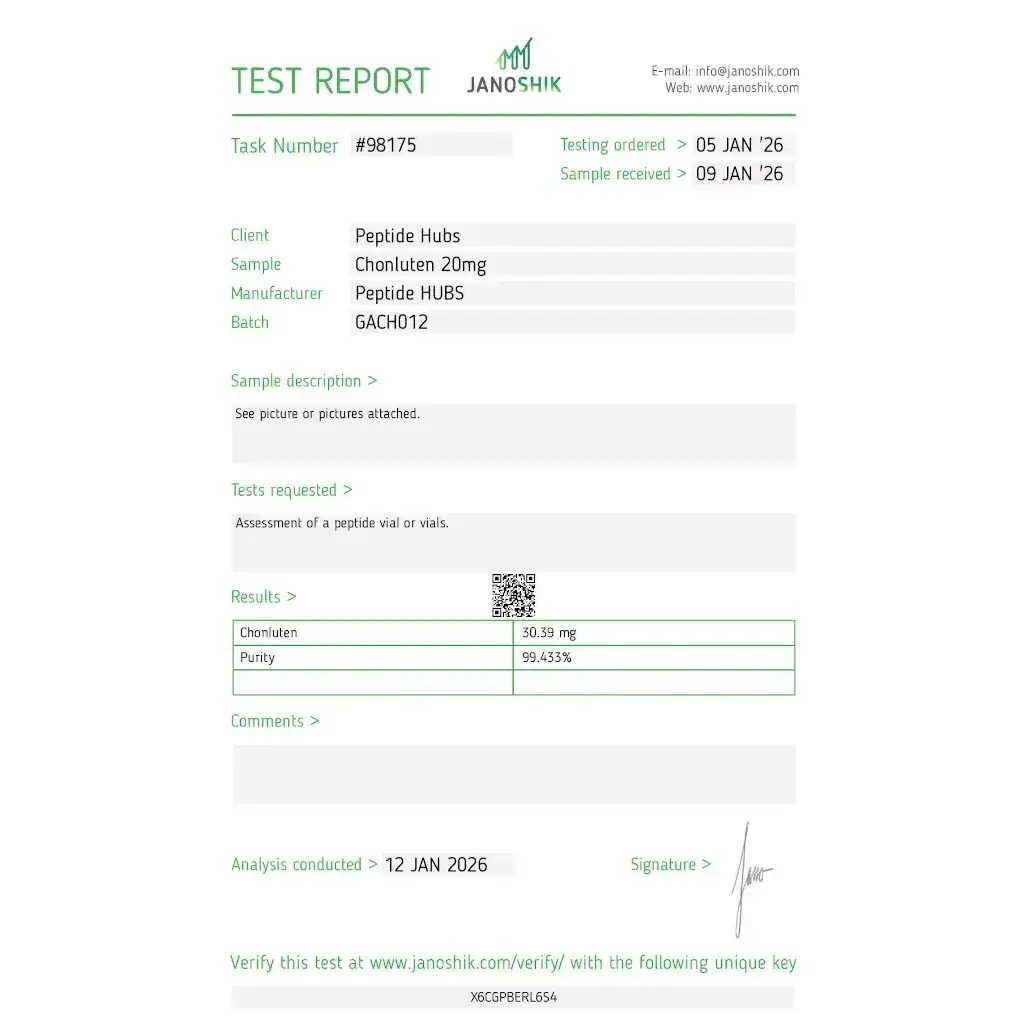
Laboratory Test: View Lab Report
In the high-performance world of bodybuilding and extreme fitness, respiratory efficiency is often the unsung hero of endurance, recovery, and overall systemic health. Peptide Hubs Chonluten 20 mg presents a unique research opportunity with a synthetic peptide bioregulator derived from lung tissue. For athletes, researchers, and biohackers in the USA, Chonluten offers a targeted tool to investigate pulmonary epithelial regeneration, antioxidant defense, and the complex interplay between respiratory health and whole-body performance. When heavy training, environmental stressors, or certain performance-enhancing compounds challenge the respiratory system, maintaining optimal lung function becomes critical. Choosing to buy Chonluten USA from Peptide Hubs provides access to a high-purity, research-grade compound for exploring these vital physiological connections.
Chonluten belongs to a class of compounds known as cytomaxes or tissue-specific bioregulators—short peptide sequences designed to modulate gene expression in their target organs. Developed from natural lung tissue extracts, its synthesized form contains specific amino acid chains that research suggests can influence epithelial cell regeneration, normalize cytokine profiles, and enhance antioxidant responses within pulmonary tissues. For athletes pushing cardio-respiratory limits or using compounds that may increase oxidative stress, this targeted action is of significant research interest. The 20 mg high-concentration vial from Peptide Hubs ensures researchers have ample, pure material for comprehensive studies on respiratory support and its potential downstream benefits on recovery and performance biomarkers.
The primary research focus for Chonluten revolves around its potential organ-specific supportive effects on lung tissue. Its proposed mechanism involves epigenetic modulation, where its peptide components may help normalize the expression of genes related to cellular repair, inflammation control, and antioxidant production specifically in respiratory epithelial cells. This could translate to research models showing enhanced resilience of lung tissue to oxidative damage from intense exercise or environmental pollutants.
For the performance-focused researcher, the implications extend beyond basic lung health. Improved respiratory efficiency means better oxygenation of working muscles, potentially delaying the onset of fatigue during high-volume training or cardio sessions. Furthermore, by potentially modulating systemic cytokine balance through lung-mediated pathways, Chonluten research could intersect with studies on overall recovery and inflammation management. The lungs are not just oxygen exchangers; they are active immune organs. Supporting their health may have ripple effects on whole-body inflammatory status. This positions Chonluten as a novel, systemic-support research agent, distinct from other organ-targeting peptides like Livagen 20 mg (liver) or Ovagen 20 mg.
Peptide Hubs Chonluten 20 mg is supplied as a lyophilized powder. For research use, reconstitution with sterile bacteriostatic water is recommended. Adding 2 mL of diluent creates a concentration of 10 mg/mL. Based on available literature and protocols for similar tissue bioregulators, research dosing typically follows a less frequent, "epigenetic priming" approach rather than continuous high-dose administration.
A common research protocol involves a relatively low daily dose administered over a defined "course." Studies with bioregulators often use doses in the range of 2 to 5 mg per day in human equivalent models, often taken orally (as these peptides are designed to survive digestion) or via subcutaneous injection. A standard research cycle might involve daily administration for 10 to 20 days, followed by a significant break of several months, based on the theory that they induce lasting changes in gene expression. For cell culture research investigating direct effects on lung epithelial cells, concentrations would be in the microgram per milliliter range. Reconstituted peptide should be stored refrigerated (2-8°C) and used within the study period, though its stability in solution for oral use may be limited.
In a holistic performance research framework, Chonluten would be studied as a foundational support agent for cardiopulmonary resilience, often in stacks designed to enhance endurance, recovery, and systemic detoxification.
For Cardio-Respiratory Performance & Endurance: To study improvements in VO2 max and stamina, Chonluten could be researched alongside other cardiopulmonary support peptides. A stack with Cardiogen 20 mg (heart tissue bioregulator) and the mitochondrial peptide MOTS-c 10 mg could create a comprehensive model for investigating enhanced oxygen utilization and energy production during endurance activity.
For Systemic Recovery & Inflammation Management: To explore whole-body recovery, Chonluten's potential modulation of lung-mediated cytokines could be combined with systemic anti-inflammatory agents. Research could pair it with BPC 157 5 mg and the antioxidant L-Glutathione 600 mg to study synergistic effects on reducing post-exercise inflammation and oxidative stress.
For Detoxification & Organ Support During Cycles: During research involving hepatotoxic oral compounds, providing multi-organ support is a valid study design. Chonluten (lung), alongside Livagen 20 mg (liver), and GHK-Cu 50 mg (skin/connective tissue) could be studied as a model for investigating comprehensive organ resilience and systemic protection.
For Immune System Modulation Research: Given the lung's role as an immune interface, Chonluten could be included in studies on immune function under training stress. It could be combined with immune-modulating peptides like Thymosin Alpha-1 (if available) or general resilience compounds like Epitalon 50 mg to investigate maintaining immune competency during periods of intense physical demand.
Tissue bioregulator peptides like Chonluten are generally considered to have a very high safety margin in research, as they are composed of natural amino acid sequences and work through subtle epigenetic modulation rather than strong pharmacological agonism. Based on extensive use in other contexts, they are typically very well-tolerated. The most commonly reported observations in research are none or mild, transient reactions as the body adjusts.
There are no known androgenic, estrogenic, or hepatotoxic effects. Chonluten does not suppress the HPTA axis and has no stimulant properties. Because of their gentle, regulatory action, the risk of overdose or acute toxicity is extremely low. However, as with any research compound, the primary safety concern is product purity and sterility. Impurities from improper synthesis could cause unintended reactions. Peptide Hubs' stringent manufacturing and third-party testing protocols minimize this risk. Researchers interested in the broader science of bioactive peptides can refer to resources like the NCBI database on regulatory peptides.
Chonluten represents a different paradigm from most performance peptides. While compounds like GHRPs directly stimulate hormone release or growth factors directly bind receptors, bioregulators are theorized to work by providing "epigenetic cues." They are short peptides that may act as signaling molecules to help "remind" aging or stressed cells of their optimal genetic expression profile. This makes them particularly interesting for longevity and health-span research in athletic models. The question isn't just about immediate performance, but about sustaining the health of critical organ systems—like the lungs—over a long career of intense training. This preventative, system-supportive angle offers a complementary research strategy to direct anabolic or metabolic interventions.
High-performance athletes place unique demands on their respiratory systems. High-intensity training increases ventilation rates and oxidative stress in lung tissue. Certain environments (chlorinated pools, dusty gyms, poor air quality) add further insult. Some performance-enhancing compounds, particularly oral steroids, can negatively impact cardiovascular and respiratory efficiency. Research into supportive agents like Chonluten, therefore, addresses a genuine, often-overlooked bottleneck in sustained athletic performance and recovery. It moves beyond mere lung capacity to study the cellular health and resilience of the entire respiratory epithelium, which is fundamental for gas exchange, immune defense, and systemic acid-base balance.
Research with specialized bioregulators demands confidence in their authenticity and composition. Peptide Hubs' Chonluten is produced using advanced peptide synthesis technology, with the sequence and composition verified to match established research standards. Each batch undergoes HPLC analysis for purity and is tested for sterility and apyrogenicity. The high 20 mg concentration allows for flexible study design, from long-term in-vivo models to concentrated in-vitro work. For research institutions, longevity labs, and performance scientists in the USA looking to buy Chonluten for pioneering studies on organ-specific support and its impact on holistic performance, Peptide Hubs provides the documented quality and precision required for serious scientific investigation.
Name: Chonluten
Drug Class: Synthetic Lung Tissue Bioregulator (Cytomax)
Other common names and terms: Lung Peptide Bioregulator, Pulmonary Cytomax
Active Life: Not fully characterized; epigenetic effects may be long-lasting.
Detection Time: Not applicable.
Chemical Structure: Short, specific amino acid peptides derived from lung tissue.
Common Doses: Research doses: 2-5 mg per day for 10-20 day courses.
Blood pressure: No effect; may support cardiovascular health via improved oxygenation.
Acne: No (Non-androgenic).
Water retention: No (Non-estrogenic).
Aromatisation: No.
Liver toxicity: No; may support liver indirectly via improved systemic oxygenation.
Decrease HPTA function: No effect on the hypothalamic-pituitary-testicular axis.
A key feature of many tissue bioregulator peptides like Chonluten is their oral bioavailability. They are specifically designed with short, stable peptide sequences that can survive digestion and reach target tissues. Therefore, oral administration is a standard and effective research route. Sublingual administration is also used in some studies. Subcutaneous injection is an alternative route but is often not necessary for this class of peptides.
Research cycles with bioregulators are typically short and intermittent. A common protocol is a 10 to 20-day course of daily administration, followed by a long break of 3 to 6 months. This is based on the theory that they induce epigenetic changes that have a sustained effect, eliminating the need for continuous use. Research can involve 1-2 such courses per year to study cumulative or maintenance effects.
Realistic research goals focus on support and resilience, not direct stimulation. Studies might investigate markers of lung epithelial health, reduced exercise-induced oxidative stress in respiratory tissues, improved recovery of breathing rate post-exercise, or better tolerance to high-intensity cardio. The effects are supportive and systemic rather than dramatic or immediately anabolic.
Yes, this is a relevant research area. Given its proposed mechanisms of epithelial regeneration and cytokine modulation, Chonluten could be studied in models of post-infection recovery or lung irritation. Research could explore whether it supports the restoration of normal lung tissue architecture and function following an inflammatory insult, which is applicable to athletes returning to training after illness.
Authenticity is verified through sequence analysis and biological activity correlation. Peptide Hubs uses Mass Spectrometry to confirm the peptide fingerprint matches the expected composition of lung-derived bioregulator peptides. Furthermore, quality is assured via HPLC purity testing (>98%) and strict adherence to the synthesis protocols established in the research literature for these specific compounds.
Review this product and help others make an informed decision. Log in to leave your feedback.
Drug Class: Growth Hormone-Releasing Hormone (GHRH) Analog
Composition: Sermorelin
Dosage: 5 mg/vial
Form: Lyophilized Powder
Unit: 2 mL Vial
Brand: Peptide Hubs
For Subcutaneous Injection
Laboratory Test: View Lab Report
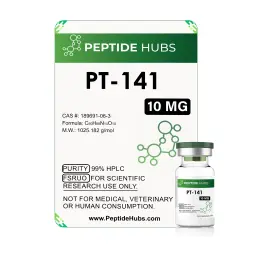
Drug Class: Melanocortin Receptor Agonist
Composition: Bremelanotide
Dosage: 10 mg/vial
Form: Lyophilized Powder
Unit: 2 mL Vial
Brand: Peptide Hubs
Laboratory Test: View Lab Report
For Subcutaneous Injection
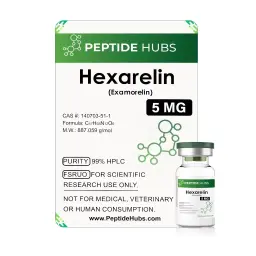
Drug Class: Growth Hormone-Releasing Peptide (GHRP-6 Analog)
Composition: Examorelin (Hexarelin)
Dosage: 5 mg/vial
Form: Lyophilized (Freeze-Dried) Powder
Unit: 2 mL Sterile Vial
Brand: Peptide Hubs
For Research Use in Laboratory Settings Only.
Laboratory Test: View Lab Report
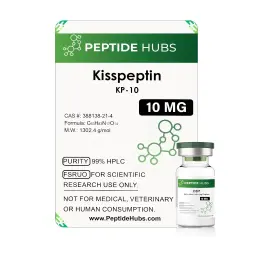
Drug Class: Neuropeptide Hormone Regulator
Composition: Kisspeptin-10
Dosage: 10 mg/vial
Form: Lyophilized Powder
Unit: 2 mL Vial
Brand: Peptide Hubs
For Research Use Only
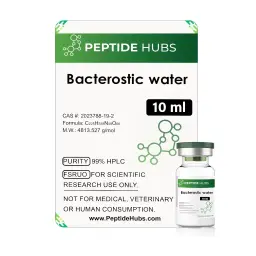
Drug Class: Sterile Diluent & Preservative
Composition: Sterile Water with 0.9% Benzyl Alcohol
Dosage: 10 mL/vial
Unit: 10 mL Vial
Brand: Peptide Hubs
Laboratory Test: View Lab Report
For Reconstitution of Lyophilized Peptides
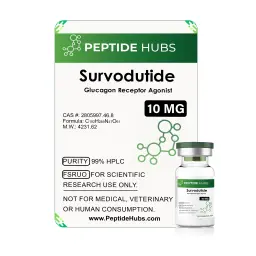
Drug Class: Glucagon/GLP-1 Receptor Dual Agonist
Composition: Survodutide (BI 456906)
Dosage: 10 mg/vial
Form: Lyophilized (Freeze-Dried) Powder
Unit: 2 mL Sterile Vial
Brand: Peptide Hubs
For Research Use in Laboratory Settings Only.
Laboratory Test: View Lab Report
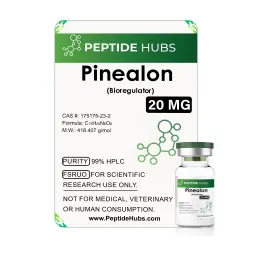
Drug Class: Synthetic Tripeptide (Neuropeptide)
Composition: Pinealon (Glu-Asp-Arg)
Dosage: 20 mg/vial
Form: Lyophilized (Freeze-Dried) Powder
Unit: 2 mL Sterile Vial
Brand: Peptide Hubs
For Research Use in Laboratory Settings Only.
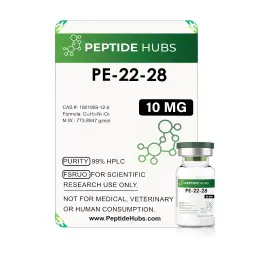
Drug Class: Nootropic / Neuropeptide
Composition: PE-22-28 (Lyophilized Powder)
Dosage: 100-300 mcg per day
Form: Lyophilized Powder in 2 mL Vial
Unit: 10 mg per Vial
Brand: Peptide Hubs
Laboratory Test: View Lab Report
For Research Use Only