


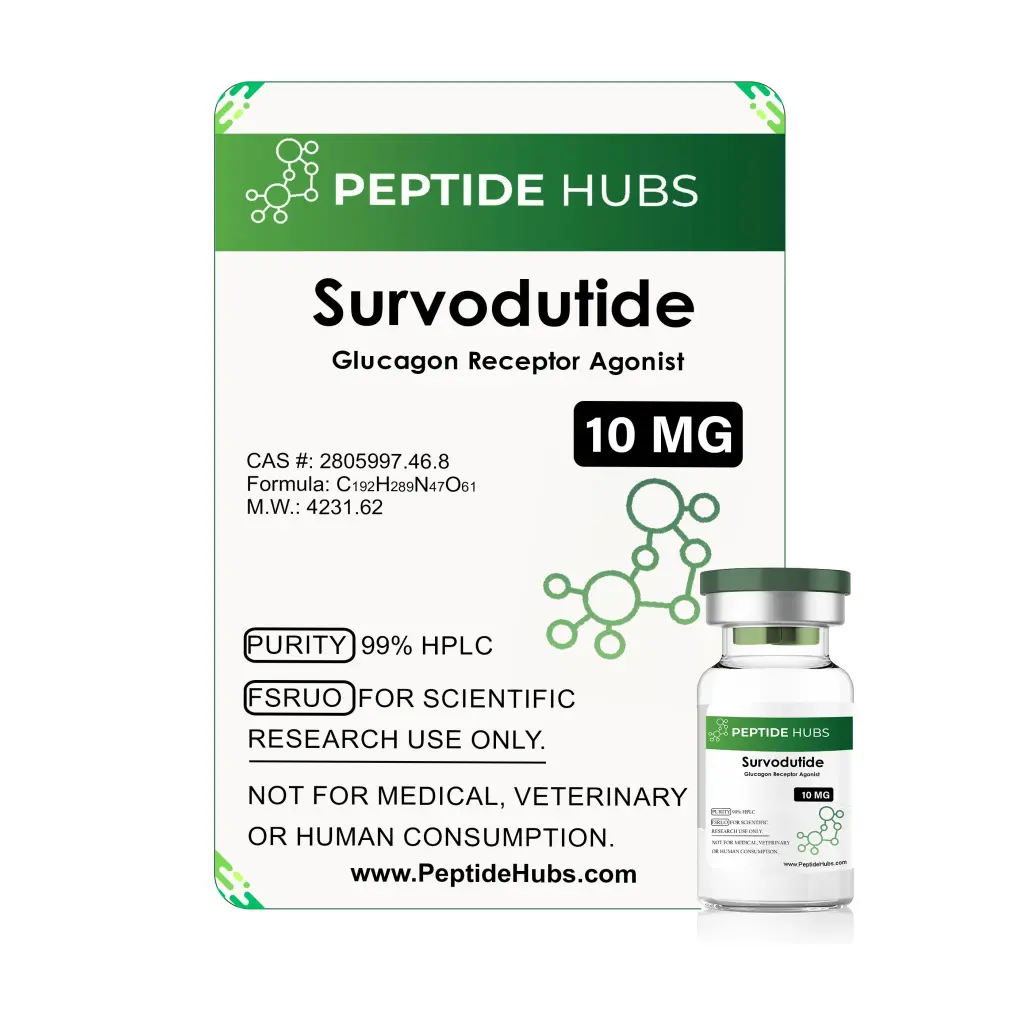
Drug Class: Glucagon/GLP-1 Receptor Dual Agonist
Composition: Survodutide (BI 456906)
Dosage: 10 mg/vial
Form: Lyophilized (Freeze-Dried) Powder
Unit: 2 mL Sterile Vial
Brand: Peptide Hubs
For Research Use in Laboratory Settings Only.
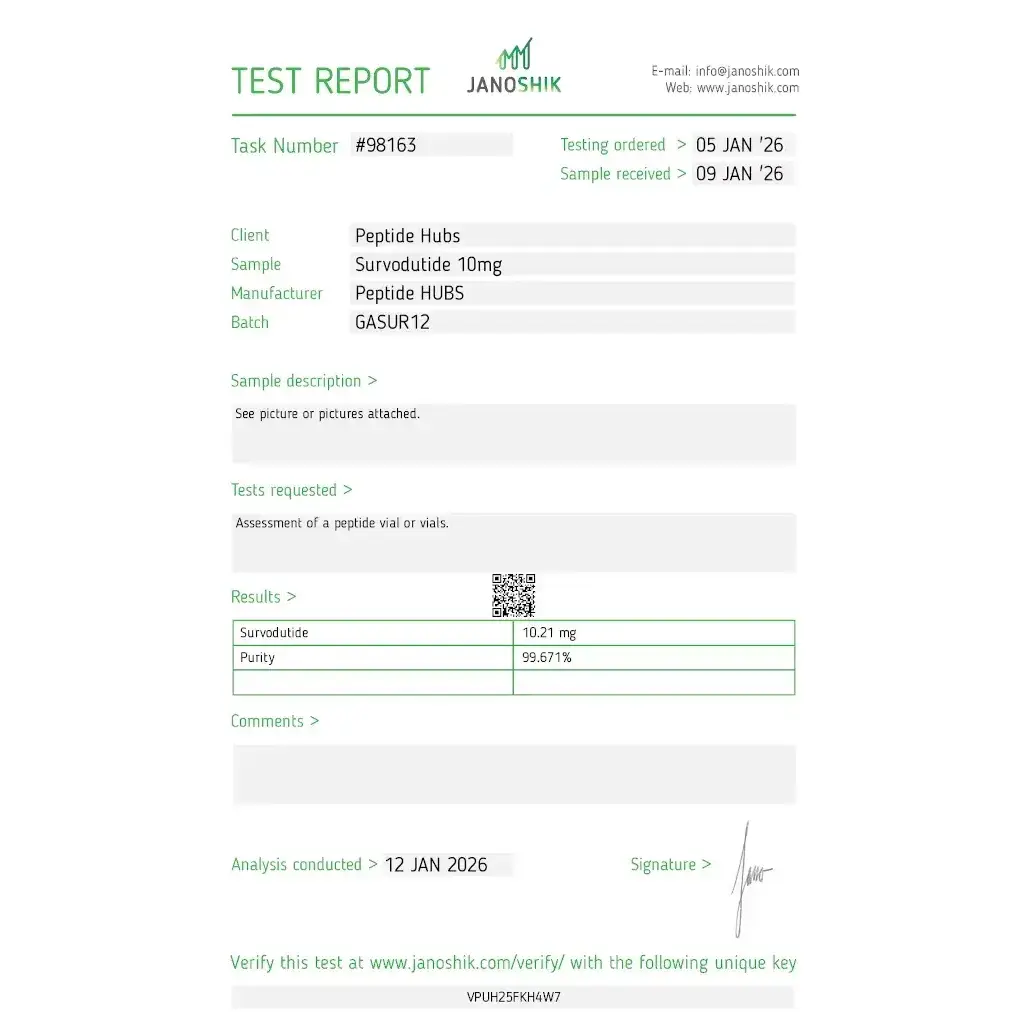
Laboratory Test: View Lab Report
The cutting edge of metabolic science has arrived with Peptide Hubs Survodutide 10 mg, a sophisticated research peptide representing the next generation of glucagon-like peptide-1 (GLP-1) and glucagon receptor dual agonists. For bodybuilders, fitness researchers, and performance enthusiasts in the USA, Survodutide (development code BI 456906) offers a compelling compound for investigating profound fat loss, enhanced metabolic rate, and improved body composition beyond what traditional GLP-1 agonists can achieve alone. By simultaneously targeting two key metabolic pathways, it presents a unique research model for studying extreme recomposition. When you decide to buy Survodutide USA from Peptide Hubs, you're accessing a high-purity research tool designed for rigorous, legitimate scientific inquiry into advanced weight management and metabolic optimization.
Survodutide is a 29-amino acid peptide engineered to act as a potent, balanced agonist at both the GLP-1 and glucagon receptors. This dual mechanism is its defining characteristic. The GLP-1 component promotes insulin secretion, slows gastric emptying, and increases satiety signals in the brain. The glucagon component, crucially, increases energy expenditure by stimulating hepatic glucose production and promoting lipolysis (fat breakdown), effectively turning the body into a more efficient fat-burning machine. This combination targets both sides of the energy balance equation: reducing caloric intake while increasing caloric output. Peptide Hubs ensures each 10 mg vial contains meticulously synthesized, lyophilized peptide of the highest purity (>99%), providing researchers with a reliable and consistent substrate for controlled metabolic studies.
In preclinical and clinical research models, dual agonists like Survodutide have demonstrated significantly greater weight loss efficacy compared to selective GLP-1 agonists. The theoretical effects for body composition research are multi-faceted. First, the appetite suppression is profound, facilitating severe caloric deficits without the debilitating hunger that typically derails cuts. Second, the increase in resting energy expenditure from glucagon receptor activation creates a metabolic advantage, potentially preserving lean mass during deficits by providing alternative energy from adipose tissue. Third, the improved glucose homeostasis and insulin sensitivity can create a more anabolic environment, potentially enhancing nutrient partitioning—a critical factor when researching the preservation of muscle on very low calories or during post-cycle therapy.
For the performance-focused researcher, these effects open doors to studying "dreamer bulk" scenarios or contest-prep conditioning. The ability to aggressively strip fat while theoretically maintaining strength and muscle fullness is a primary research interest. This makes Survodutide a compound of significant interest for studies on pre-competition protocols or for overcoming metabolic plateaus where traditional dieting fails. Its mechanisms are complementary to, yet distinct from, other metabolic peptides like Semaglutide 5 mg (a pure GLP-1 agonist) or stimulant-based fat burners, offering a novel pathway for investigation.
As a research chemical, precise protocol design is essential. The Peptide Hubs Survodutide is supplied as a 10 mg lyophilized powder. For experimental use, reconstitution with bacteriostatic water is standard. Adding 1 mL of diluent creates a concentration of 10 mg/mL. It is crucial to note that human clinical trial doses for Survodutide are typically measured in milligrams administered weekly via subcutaneous injection, reflecting its long half-life (estimated 100+ hours). In a research context with animal models, dosing is weight-based and significantly lower.
A common research administration protocol for studying chronic metabolic effects involves once-weekly subcutaneous injections. The long half-life ensures stable receptor occupancy and continuous pharmacological action. Research cycles to observe significant changes in body composition and metabolic parameters typically span 8 to 16 weeks, allowing time for adaptive metabolic changes and substantial fat loss to occur. Starting at a lower research dose and titrating upwards every 2-4 weeks is a standard practice to model the acclimatization process and minimize potential gastrointestinal disturbances in study subjects. Reconstituted peptide should be stored refrigerated (2-8°C) and used within 4 weeks, though freezing aliquots is recommended for longer-term stability.
In a hypothetical research framework aimed at extreme body recomposition, Survodutide would be studied as a foundational metabolic agent. Its powerful effects allow for the investigation of synergy with compounds targeting muscle preservation, nutrient partitioning, and other fat-loss pathways.
For Maximum Fat Loss & Muscle Sparing: To study the ultimate "cutting" protocol, Survodutide could be researched alongside anti-catabolic and anabolic agents. A stack with the selective androgen receptor modulator LGD 4033 (available elsewhere) or the peptide IGF-1 LR3 1 mg could provide a model for investigating lean mass retention in a severe deficit. Adding GHK-Cu 50 mg could further support skin elasticity and recovery during rapid weight loss.
For Metabolic Health & Post-Cycle Therapy (PCT) Research: The insulin-sensitizing effects of Survodutide make it relevant for studying metabolic recovery after anabolic steroid cycles. Research could pair it with PCT staples to investigate if improved glucose metabolism aids in restoring natural hormone function and mitigating fat gain during the transitional phase.
For Appetite Control & Nutrient Timing Studies: While Survodutide powerfully suppresses appetite, researching its combination with peptides that enhance growth hormone secretion for nutrient partitioning could be valuable. A stack with Tesamorelin 5 mg or CJC-1295/Ipamorelin could create a model for studying the "anabolic window" effect—directing all consumed nutrients toward muscle repair in a controlled feeding paradigm.
For Gut Health & Nutrient Absorption Research: Given the slowed gastric emptying from GLP-1 activity, studying digestive support could be relevant. Combining Survodutide with gut-healing peptides like BPC 157 5 mg could provide a model for investigating gastrointestinal comfort and nutrient absorption efficiency during prolonged calorie restriction.
Based on clinical trial data for dual agonists, the side effect profile is primarily gastrointestinal and dose-dependent. In research models, the most commonly observed effects include transient nausea, vomiting, diarrhea, and constipation, especially at the initiation of treatment or after dose escalation. These effects typically diminish over time as subjects adapt. Unlike anabolic steroids, Survodutide has no androgenic, estrogenic, or hepatotoxic properties. It does not suppress the HPTA axis.
A key research consideration is the risk of hypoglycemia, particularly in subjects with normal or low baseline glucose. The combined insulinotropic (GLP-1) and gluconeogenic (glucagon) actions require careful monitoring of blood glucose in live models. Furthermore, the potent appetite suppression necessitates ensuring research subjects maintain adequate micronutrient and protein intake to prevent malnutrition in long-term studies. Researchers should consult primary literature on dual-agonists for comprehensive safety data, such as studies referenced in the National Institutes of Health (NIH) database. The paramount safety factor is sourcing a pure product; Peptide Hubs' verified purity eliminates risks from contaminants.
Survodutide's research value lies in its balanced co-agonism. The glucagon receptor activation is not an afterthought; it's a primary driver of efficacy. While GLP-1 reduces energy intake, glucagon increases energy expenditure by promoting the breakdown of glycogen and triglycerides. In the liver, it stimulates the conversion of amino acids and glycerol into glucose. This process, along with increased lipolysis, provides a steady stream of fuel, which may explain the notable preservation of lean mass observed in trials compared to pure GLP-1 drugs. This makes it an exceptional compound for studying the physiological limits of fat loss while maintaining metabolic function and structural tissue—a central question in performance nutrition science.
The validity of metabolic research depends on compound integrity. Peptide Hubs' Survodutide is produced in ISO-certified facilities, with each batch undergoing rigorous third-party verification via HPLC and mass spectrometry. The lyophilization process is optimized for long-term stability, and each vial is sealed under sterile conditions. This guarantees researchers are working with a product that matches the specifications of the pharmaceutical reference material. For scientists and advanced laboratories in the USA looking to buy Survodutide for pioneering metabolic research, Peptide Hubs delivers the pharmaceutical-grade precision necessary to generate credible, reproducible data on this next-generation therapeutic peptide.
Name: Survodutide
Drug Class: Glucagon/GLP-1 Receptor Dual Co-Agonist
Other common names and terms: BI 456906, GLP-1/Glucagon Dual Agonist
Active Life: Approximately 5-7 days (long half-life)
Detection Time: Not applicable for sports testing
Chemical Structure: 29-amino acid peptide
Common Doses: Clinical research doses range from 0.3 mg to 6.0 mg weekly (SC). Research animal doses are weight-scaled.
Blood pressure: May cause a modest reduction in systolic blood pressure.
Acne: No (Non-androgenic).
Water retention: No estrogenic activity; may reduce inflammation-related water retention.
Aromatisation: No (Non-estrogenic).
Liver toxicity: No hepatotoxicity associated; may improve markers of fatty liver disease.
Decrease HPTA function: No known direct suppression of the testosterone axis.
In clinical trials for weight loss, dual agonists like Survodutide have demonstrated potentially superior efficacy to single GLP-1 agonists like Semaglutide, due to the added glucagon-mediated increase in energy expenditure. Compared to Tirzepatide (a GIP/GLP-1 agonist), they work through different secondary pathways (glucagon vs. GIP), making direct strength comparisons complex. For research, Survodutide offers a unique model to study the specific effects of glucagon receptor activation on metabolism and body composition.
Reconstitute the 10 mg vial with 1 mL of sterile bacteriostatic water. Inject the water gently down the side of the vial and swirl gently until the lyophilized cake is fully dissolved. Do not shake vigorously. This creates a 10 mg/mL solution. For precise low dosing in research, further dilution with additional bacteriostatic water may be performed.
In research models, combining Survodutide with severe calorie restriction dramatically accelerates fat loss but requires extreme caution. The potent appetite suppression increases the risk of severe nutrient deficiency and lean mass catabolism. Such protocols should only be designed with rigorous monitoring for protein intake, electrolytes, and micronutrients to ensure subject health and study validity.
The glucagon component increases energy expenditure by mobilizing stored fat and promoting hepatic glucose production. This provides an alternative fuel source (free fatty acids and glucose from glycerol/amino acids), potentially sparing muscle glycogen and amino acids from being catabolized for energy. This "protein-sparing" effect is a key hypothesis in body composition research with dual agonists.
Purity and authenticity are non-negotiable. Impure or mislabeled peptides can invalidate research data and pose safety risks. Peptide Hubs provides independent, batch-specific Certificates of Analysis (CoA) from accredited labs, confirming the identity (>99% purity), potency, and sterility of the product. This verifiable quality is the foundation of ethical and reliable scientific research.
Review this product and help others make an informed decision. Log in to leave your feedback.
Drug Class: Long-Acting Peptide Hormone
Composition: Insulin-like Growth Factor 1 Long R3
Dosage: 1 mg/vial
Form: Lyophilized (Freeze-Dried) Powder
Unit: 2 mL Vial
Brand: Peptide Hubs
For Research and Laboratory Use Only
Drug Class: Synthetic Peptide Fragment
Composition: AOD 9604
Dosage: 5 mg/vial
Form: Lyophilized Powder
Unit: 2 mL Vial
Brand: Peptide Hubs
For Research and Laboratory Use Only
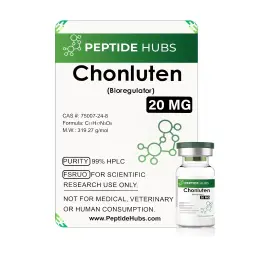
Drug Class: Synthetic Lung Tissue Bioregulator Peptide
Composition: Chonluten (Lung-derived peptide complex)
Dosage: 20 mg/vial
Form: Lyophilized (Freeze-Dried) Powder
Unit: 2 mL Sterile Vial
Brand: Peptide Hubs
For Research Use in Laboratory Settings Only.
Laboratory Test: View Lab Report
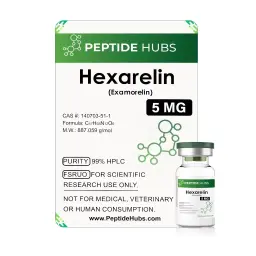
Drug Class: Growth Hormone-Releasing Peptide (GHRP-6 Analog)
Composition: Examorelin (Hexarelin)
Dosage: 5 mg/vial
Form: Lyophilized (Freeze-Dried) Powder
Unit: 2 mL Sterile Vial
Brand: Peptide Hubs
For Research Use in Laboratory Settings Only.
Laboratory Test: View Lab Report
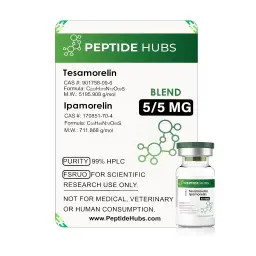
Drug Class: Growth Hormone Secretagogue Blend (GHRH Analog + GHRP)
Composition:
- Tesamorelin 5 mg
- Ipamorelin 5 mg
Dosage: 10 mg/vial
Form: Lyophilized Powder
Unit: 2 mL Vial
Brand: Peptide Hubs
Laboratory Test: View Lab Report
For Subcutaneous Injection
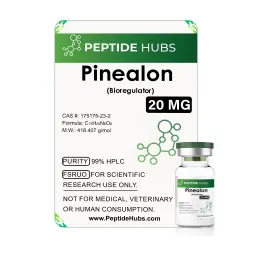
Drug Class: Synthetic Tripeptide (Neuropeptide)
Composition: Pinealon (Glu-Asp-Arg)
Dosage: 20 mg/vial
Form: Lyophilized (Freeze-Dried) Powder
Unit: 2 mL Sterile Vial
Brand: Peptide Hubs
For Research Use in Laboratory Settings Only.
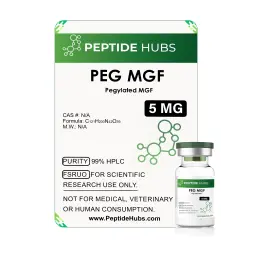
Drug Class: PEGylated Mechano Growth Factor
Composition: Pegylated Mechano Growth Factor (IGF-1Ec)
Dosage: 5 mg/vial
Form: Lyophilized (Freeze-Dried) Powder
Unit: 2 mL Sterile Vial
Brand: Peptide Hubs
For Research Use in Laboratory Settings Only.
Laboratory Test: View Lab Report
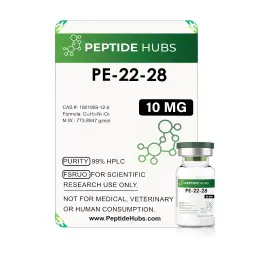
Drug Class: Nootropic / Neuropeptide
Composition: PE-22-28 (Lyophilized Powder)
Dosage: 100-300 mcg per day
Form: Lyophilized Powder in 2 mL Vial
Unit: 10 mg per Vial
Brand: Peptide Hubs
Laboratory Test: View Lab Report
For Research Use Only
