Dragon Pharma SS-31 50 mg supplies a lyophilized formulation of SS-31 (elamipretide), a synthetic mitochondria-targeted tetrapeptide (D-Arg-dimethylTyr-Lys-Phe-NH2) designed to concentrate at the inner mitochondrial membrane and bind cardiolipin, a phospholipid critical for mitochondrial bioenergetics and membrane stability. Unlike peptides that act on cell-surface receptors, SS-31 works intracellularly at the mitochondrial level—a mechanism studied across cardiac, renal, neurodegenerative, and ophthalmic disease models.
This Dragon Pharma formulation provides 50 mg of SS-31 per 2 mL vial in lyophilized powder form, requiring reconstitution before laboratory use. SS-31 received FDA approval in September 2025 as Forzinity for a single narrow indication: improving muscle strength in Barth syndrome patients weighing at least 30 kg. However, the approval carries a postmarketing requirement for a confirmatory trial, and the drug failed its Phase 3 trial in primary mitochondrial myopathy. This research vial is not the approved pharmaceutical product.
Key Research Characteristics
Cardiolipin Binding: SS-31 associates with cardiolipin at the inner mitochondrial membrane, stabilizing cristae structure and supporting electron transport chain function.
FDA Approval (Narrow): Approved September 2025 as Forzinity for Barth syndrome muscle strength, with a required confirmatory trial due 2030.
Phase 3 Failure in PMM: MMPOWER-3 did not improve 6-minute walk test or fatigue in primary mitochondrial myopathy.
Post Hoc Subgroup Signal: Patients with mtDNA replisome disorders showed improvement in 6MWT (37.3 m vs -8.0 m placebo) in exploratory analysis.
Ongoing Research: Phase 3 development continues in dry AMD and mitochondrial myopathy; early AMD Phase 1 showed visual function improvements.
Gray-Market Status: A 2026 review lists SS-31 among unapproved peptides marketed to athletes with scarce human safety data for that population.
How SS-31 Is Studied
SS-31 is a cell-permeable tetrapeptide with a dimethyltyrosine residue that confers mitochondrial targeting. Once inside the mitochondrion, it binds cardiolipin—a phospholipid exclusively found in the inner mitochondrial membrane—and protects it from oxidative damage and peroxidation. This cardiolipin stabilization is proposed to preserve cristae architecture, maintain electron transport chain efficiency, and reduce mitochondrial reactive oxygen species production.
The clinical evidence is mixed and indication-specific. In Barth syndrome, an open-label extension showed sustained improvements in muscle strength. In primary mitochondrial myopathy, the Phase 3 MMPOWER-3 trial failed its primary endpoints. A post hoc analysis suggested benefit in a genetic subgroup (mtDNA replisome disorders), but post hoc findings require prospective confirmation. In dry AMD, Phase 1 showed visual function improvements, but Phase 2 (ReCLAIM-2) results are not yet published in accessible form.
SS-31 vs. Other Mitochondrial Research Peptides
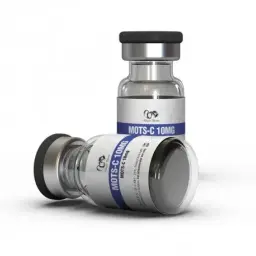
SS-31's mechanism differs fundamentally from MOTS-C 10 mg, a mitochondrial-derived peptide that acts as a metabolic regulator through AMPK activation, and from Humanin 10 mg, which is cytoprotective through BCL-2 family binding. SS-31 is unique in directly targeting cardiolipin at the inner membrane. Researchers comparing mitochondrial peptides should note that only SS-31 has FDA approval (narrow, with confirmatory requirements), while MOTS-C and Humanin remain preclinical.
Important Considerations
This product is a lyophilized research peptide supplied for laboratory investigation only. It is not intended for human or veterinary consumption.
Formulation & Research Profile
Product Specifications
Labeled product attributes and general research reference data for SS-31 50 mg.
Pharmacological values are general reference information. This product is supplied for laboratory research only. SS-31 is FDA-approved only for Barth syndrome muscle strength, with a required confirmatory trial.
Laboratory Handling Context
Research Handling Information
SS-31 is supplied as lyophilized powder for laboratory research. The FDA-approved Forzinity product has a specific subcutaneous dosing schedule for Barth syndrome; this research vial is a different format with no established human protocol.
Reconstitution Overview
Lyophilized SS-31 requires reconstitution with a suitable solvent before laboratory use. Bacteriostatic Water is commonly used for peptide reconstitution. For a 50 mg vial, adding 2 mL of solvent yields a concentration of 25 mg/mL. Gentle swirling—not vigorous shaking—is recommended to avoid peptide aggregation.
In clinical trials, elamipretide was administered as a subcutaneous injection (typically 40 mg daily in AMD studies). The approved Forzinity product uses a specific formulation and dosing schedule for Barth syndrome. These protocols do not translate directly to a reconstituted 50 mg research vial. No pharmacokinetic data exists for self-reconstituted SS-31.
Practical Handling Considerations
Reconstitution volume: 2 mL solvent yields 25 mg/mL; adjust volume to achieve the desired working concentration.
Solvent selection: Bacteriostatic water is standard for most peptide research.
Handling technique: Swirl gently; avoid vortexing or vigorous shaking.
Storage after reconstitution: Refrigerate reconstituted peptide; stability data for this specific product is not available.
Clinical trial context: AMD trials used 40 mg SC daily; this is not a recommendation for research vials.
Related mitochondrial peptides:MOTS-C 10 mg acts through AMPK; Humanin 10 mg is cytoprotective through BCL-2 binding.
Important Research Notice
SS-31 has no established dosing protocol for reconstituted research vials. The FDA-approved product is indicated only for Barth syndrome and carries a requirement for a confirmatory trial. This product is supplied strictly for laboratory research.
Delivery & Fulfillment
Shipping & Delivery Information
Shipping estimates and fulfillment options vary by warehouse and product availability. Review the information below before placing your order.
Shipping Options & Delivery Estimates
International Warehouse
International Fulfillment
13–15Business Days
Orders dispatched from our international warehouse typically arrive within 13–15 business days after dispatch. Delivery times may vary depending on destination, customs processing, and carrier conditions.
U.S. Domestic Warehouse
Domestic Fulfillment
4–5Business Days
Eligible orders dispatched from our U.S. domestic warehouse typically arrive within 4–5 business days after dispatch. This option is available only for products stocked in the domestic warehouse.
Important Shipping Information
Warehouse availability: Not all products are available from both warehouses. Available shipping options are displayed on the product page.
Order processing: Delivery estimates begin when an order is dispatched, not when payment is completed. Processing time before dispatch is additional.
Shipment tracking: Tracking information is provided when available, according to the applicable shipping policy.
Delivery delays: Customs inspections, carrier disruptions, holidays, and other circumstances may affect estimated delivery times.
Full Shipping Policy
Review the complete shipping terms, delivery conditions, and applicable order policies before placing an order.
Lyophilized peptides require specific storage conditions to maintain stability. Follow the guidance below for Dragon Pharma SS-31 50 mg.
Recommended Storage Conditions
Storage Temperature
Store lyophilized powder refrigerated at 2°C to 8°C or frozen at -20°C for long-term storage. Avoid repeated temperature fluctuations.
Moisture Protection
Keep the vial sealed and protected from humidity. Lyophilized peptides are hygroscopic; moisture exposure can degrade the peptide before reconstitution.
Light Exposure
Store in the original packaging or a dark container. Protect from direct light, which can degrade peptide structure.
Original Vial
Keep the lyophilized powder in the supplied vial until reconstitution. Allow refrigerated vials to reach room temperature before opening to prevent condensation.
Handling & Stability
Expiration date: Refer to the date printed on the vial, if present. No manufacturer-verified shelf life was supplied for this batch.
Shelf life (lyophilized): Generally stable for extended periods when refrigerated or frozen and protected from moisture; follow any manufacturer-printed date.
After reconstitution: Refrigerate and use within the timeframe specified by your laboratory protocol. No stability data for this specific product was supplied.
Handling technique: Use sterile technique when reconstituting. Avoid repeated freeze-thaw cycles of reconstituted solution.
Child safety: Store in a locked refrigerator or cabinet inaccessible to children and pets.
Disposal: Dispose of unused peptide according to institutional or local laboratory waste guidelines.
Product Questions & Answers
Frequently Asked Questions
Common questions about SS-31 50 mg, its research background, and laboratory handling.
01
What are the benefits of SS-31 peptide in research?
SS-31 is studied for its ability to bind cardiolipin at the inner mitochondrial membrane, stabilizing mitochondrial structure and supporting energy production. It is FDA-approved for a narrow indication—improving muscle strength in Barth syndrome—based on open-label data, with a confirmatory trial required by 2030. It is not approved for athletic performance, anti-aging, or general mitochondrial support, and it failed its Phase 3 trial in primary mitochondrial myopathy.
02
How often should I inject SS-31?
No established injection schedule exists for reconstituted research vials. In clinical trials, elamipretide was administered as a once-daily subcutaneous injection (typically 40 mg in AMD studies). The approved Forzinity product uses a specific dosing schedule for Barth syndrome. These are pharmaceutical protocols, not recommendations for research peptides. Self-administration of research-grade SS-31 has no safety or dosing data.
03
Can I take SS-31 and MOTS-c together?
No controlled study has tested this combination. SS-31 targets cardiolipin at the inner mitochondrial membrane; MOTS-C 10 mg is a mitochondrial-derived peptide that regulates metabolism through AMPK activation. Their mechanisms are different, and combining them has not been evaluated for safety or interaction effects. Both are unapproved for general human use (SS-31 has a narrow approval for Barth syndrome only).
04
Is SS-31 FDA-approved?
Yes, but only for a very narrow indication. Elamipretide (Forzinity) was approved in September 2025 to improve muscle strength in patients with Barth syndrome weighing at least 30 kg. The approval is contingent on a confirmatory trial due in 2030, and the drug failed its Phase 3 trial in a broader mitochondrial disease population. This Dragon Pharma product is a research peptide, not the approved drug.
05
What did the Phase 3 trial in mitochondrial myopathy show?
The MMPOWER-3 trial failed its primary endpoints: subcutaneous elamipretide did not improve the 6-minute walk test or fatigue scores compared to placebo in adults with primary mitochondrial myopathy. A post hoc analysis suggested possible benefit in a genetic subgroup (mtDNA replisome disorders), but post hoc findings are hypothesis-generating, not confirmatory.
06
How should I store lyophilized SS-31?
Store the lyophilized powder refrigerated (2–8°C) or frozen (-20°C), protected from light and moisture. Allow vials to reach room temperature before opening to prevent condensation. After reconstitution, refrigerate and use according to your laboratory protocol. Avoid repeated freeze-thaw cycles. No manufacturer-verified stability data was supplied for this specific batch.
07
Is SS-31 banned in sport?
SS-31 is not explicitly named on the WADA Prohibited List, but it falls under the S0 category (non-approved substances) for athletic use. A 2026 *Sports Medicine* review lists SS-31 among unapproved peptides marketed to athletes and notes that rigorous human safety data for this population are scarce. Athletes subject to anti-doping testing should avoid unapproved peptides.
08
What makes SS-31 different from other mitochondrial peptides?
SS-31 is unique in directly binding cardiolipin, a phospholipid found exclusively in the inner mitochondrial membrane, rather than acting through cell-surface receptors or nuclear signaling. This cardiolipin interaction stabilizes cristae structure and supports electron transport. MOTS-C and Humanin work through different mechanisms (AMPK activation and BCL-2 binding, respectively).
No reviews yet.
Have you tried this product? Share your experience to help other customers. Log in to write a review.